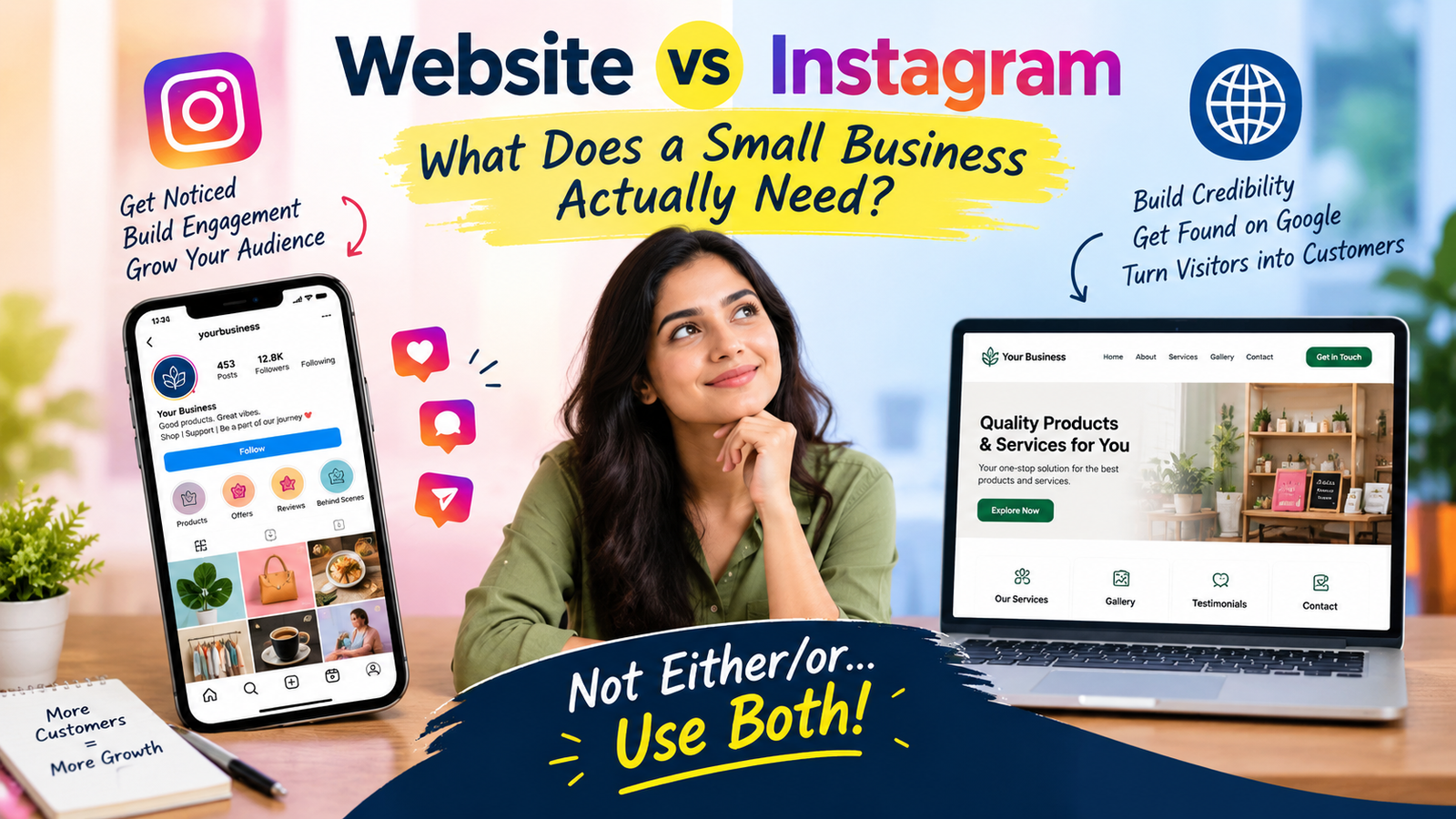
Building a strong brand today requires more than attractive social media posts or a well-designed website. Businesses need digital marketing and technology to work together to reach the right audience, generate leads, understand customer behaviour, and improve conversions.
When technology and marketing are connected, every digital activity can contribute to a clear business goal.
Why Marketing and Technology Need to Work Together
A business may have an attractive website, active social media pages, and paid advertising campaigns. But if these channels are not connected, opportunities can easily be missed.
A stronger digital strategy connects the complete customer journey:
Website → SEO → Social Media → Paid Ads → Lead Generation → Analytics → Customer Conversion
Each stage supports the next, creating a more structured approach to digital growth.
Website
A business website is often the first place where potential customers learn more about a company.
A technically strong website should be:
- Mobile-friendly
- Fast and easy to navigate
- Search-engine friendly
- Clear about products or services
- Designed with conversion in mind
A good website does more than provide information. It gives visitors a clear path towards taking action, whether that means making an enquiry, booking a service, purchasing a product, or contacting the business.
SEO
Search Engine Optimization (SEO) helps businesses improve their visibility when potential customers search online.
By targeting relevant keywords, creating useful content, and improving technical website elements, businesses can attract people who are already looking for their products or services.
SEO also works alongside website development. A well-designed website needs the right technical structure and content to perform effectively in search results.
Social Media
Social media provides businesses with a way to communicate directly with their audience.
Through Social Media Marketing (SMM) and content marketing, brands can share useful information, showcase their products and services, build credibility, and maintain regular engagement with customers.
The content published on social platforms can also bring visitors back to the website and support lead generation.
Paid Ads
Organic marketing takes time. PPC and SEM campaigns can help businesses reach targeted audiences more quickly.
Paid advertising can be used to promote specific products, services, offers, or landing pages. Campaign performance can then be measured to understand which audiences and messages are generating better results.
Lead Generation and Customer Conversion
Getting website visitors is only one part of digital marketing. Businesses also need to convert those visitors into enquiries and customers.
Effective landing pages, clear calls-to-action, enquiry forms, chat options, and well-planned customer journeys can help turn digital traffic into genuine business opportunities.
Technology can further support this process through CRM systems, automation, analytics, and AI-powered solutions.
Analytics
One of the biggest advantages of digital marketing is the ability to measure performance.
Businesses can analyse information such as:
- Website traffic
- Search rankings
- Ad performance
- Social media engagement
- Lead sources
- Conversion rates
- Customer behaviour
These insights help businesses understand what is working and where improvements are needed.
Instead of making marketing decisions based only on assumptions, companies can use data to continuously refine their strategy.
Conclusion
Digital marketing brings customers to your business, while technology helps create the systems and experiences that turn interest into action.When website development, SEO, social media, paid advertising, lead generation, and analytics work together, businesses can build a stronger and more consistent digital presence. At Zayith Technologies, we understand that digital marketing and technology work best when they support each other.